Why Does My Neck Hurt After Working From Home? – A Physiotherapist's Take
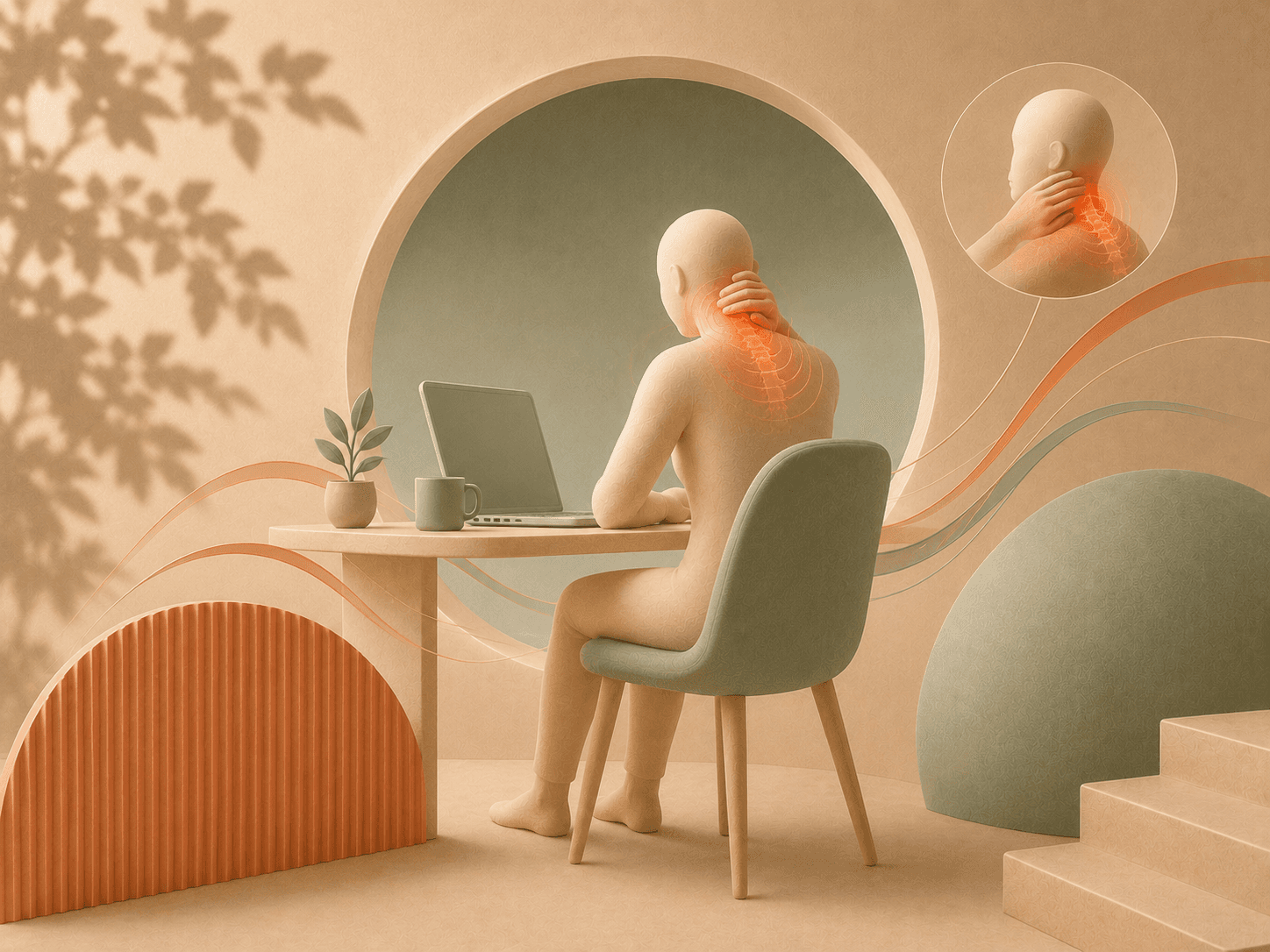
Over the last few years, we have seen a significant increase in people seeking treatment for neck pain, upper back stiffness, shoulder discomfort and headaches associated with working from home. While many people assume that their pain is simply caused by a poor desk setup or spending too much time looking at a laptop screen, the reality is often more complex.
As physiotherapists, we frequently find that the main issue is not just posture itself, but the combination of a more sedentary lifestyle and reduced physical resilience to cope with the demands of desk-based work.
Working from home has removed many of the natural opportunities for movement that existed during a typical office day. Walking to and from the station, moving between meeting rooms, going out for lunch, and interacting with colleagues all contributed to daily activity levels.
When working from home, it is easy to spend hours sitting in the same position without realising it. Even the most ergonomic workstation cannot compensate for prolonged periods of inactivity. Our bodies are designed to move, and when movement decreases, muscles become less conditioned to support the spine and maintain comfortable postures throughout the day.
Many people are exercising regularly and understandably assume they are doing everything necessary to stay healthy. Running, cycling, spinning classes, HIIT workouts and cardio-based exercise classes all provide excellent cardiovascular benefits and play an important role in overall wellbeing.
However, one of the most common findings we see in our clinics is a lack of targeted strength training. Cardiovascular fitness does not necessarily translate into muscular strength and endurance in the areas most responsible for supporting posture and movement during desk-based work.
The muscles around the neck, shoulders, upper back, trunk and hips all play an important role in maintaining efficient movement and reducing strain on joints and soft tissues. When these muscles lack strength or endurance, the body often compensates by placing increased stress on other structures, which can eventually lead to discomfort or pain.
There is often a misconception that strengthening exercises are only useful for improving posture. While stronger muscles can certainly help support better postural habits, the benefits go much further.
Targeted strengthening improves the body's biomechanics – the way the body moves and manages physical loads throughout the day. A stronger and more resilient musculoskeletal system is better able to tolerate the demands of prolonged desk work, long meetings, commuting, exercise and daily life.
Strength training can also help reduce the risk of injury during particularly stressful periods. Whether the stress comes from a demanding project at work, poor sleep, family responsibilities or life events, our bodies often have fewer resources available to cope with physical strain. Having a strong foundation can improve resilience and reduce the likelihood of pain developing when life becomes more challenging.
Physical and emotional stress are closely connected. During periods of increased stress, many people unconsciously hold tension in their neck, shoulders and upper back. Stress can also influence sleep quality, recovery, activity levels and pain sensitivity, making existing symptoms feel worse.
This is why successful treatment often involves looking beyond the area of pain and considering the wider factors that may be contributing to symptoms.
One of the most effective ways to reduce neck and upper back discomfort is to build movement into your working day.
Simple habits can have a significant impact, including:
Avoiding prolonged periods of sitting
Standing up regularly throughout the day
Taking short movement breaks between meetings
Stretching tight muscles at regular intervals
Going for brief walks during breaks
Alternating between sitting and standing when possible
Maintaining a consistent exercise and strengthening routine
These strategies help reduce stiffness, improve circulation and prevent excessive loading of the same tissues for extended periods.
If neck pain, upper back discomfort or shoulder tension is becoming persistent, recurring or affecting your work, exercise or sleep, it may be time to seek professional advice.
At Form Foundry, we provide detailed physiotherapy assessments to identify the underlying factors contributing to pain and dysfunction. Rather than focusing solely on symptoms, we assess movement patterns, strength, mobility, posture, lifestyle factors and workplace demands to develop an individualised treatment plan.
We regularly help people experiencing:
Neck pain
Upper back pain and stiffness
Shoulder pain
Lower back pain
Postural syndromes
Upper Cross Syndrome
Workstation-related aches and pains
Recurrent movement-related injuries
Treatment may include hands-on therapy, movement retraining, strength and conditioning programmes, postural education, ergonomic advice and long-term strategies to improve resilience and prevent symptoms from returning.
Neck pain associated with working from home is rarely caused by a single factor. More often, it results from a combination of prolonged sitting, reduced daily movement, insufficient strength training, workplace demands and life stressors.
The good news is that these factors can be addressed. By developing better movement habits, incorporating targeted strength training and seeking expert guidance when needed, most people can significantly reduce symptoms and improve their long-term physical health.
If you are struggling with neck pain, upper back stiffness or posture-related symptoms, the team at Form Foundry can help you understand the underlying cause and create a personalised plan to get you moving comfortably again.